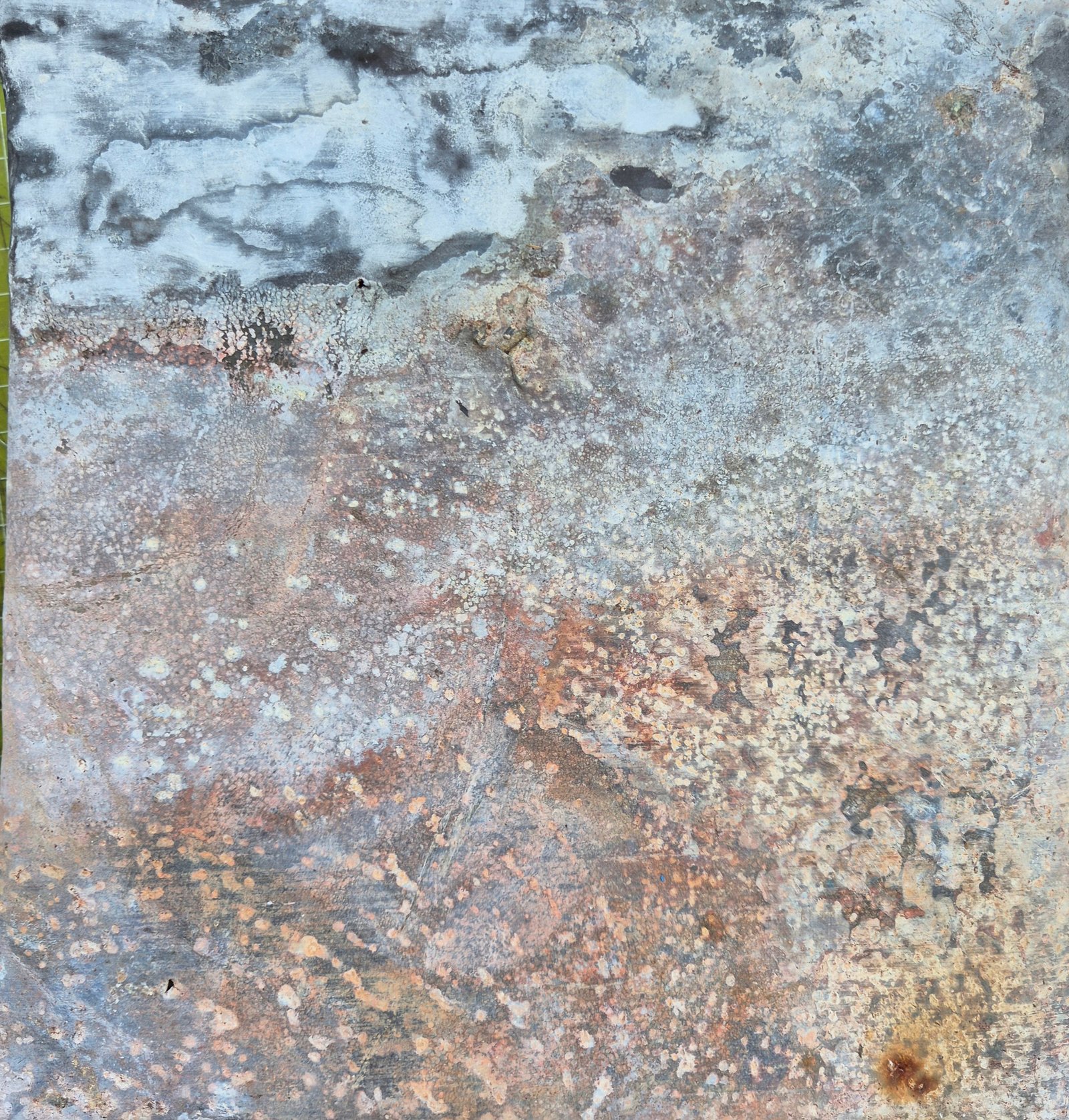
Prima Materia
Process
Each work begins with lead already corroded — oxidised, bloomed, carrying its full surface history before the maker’s hand touches it. The corrosion produces lead carbonate, lead sulphate, lead oxide: white, grey, ochre, rust, black. The full alchemical palette generated by the metal itself through exposure and time, without intervention.
The corroded lead is then hammered over a wood block, taking its final form as an object. The transformation of the surface preceded the making of the work. Prima materia was already present before the maker arrived.
The technique applied is ciseleren — chasing — a discipline from the goldsmithing tradition in which the maker works the metal from the front using punches and hammer. Where ciseleren traditionally imposes a design onto precious metal, here it follows what the corrosion has already produced. The maker reads the surface and clarifies what is present. Nothing is added.
Lead is Saturn’s metal — prima materia, the base substance from which all transformation begins. It is also the material of Roman plumbing, of the vessels that carried wine to those who held power. The connection between lead, corruption and the appetite for gold is not metaphorical. It is chemical and historical.
01
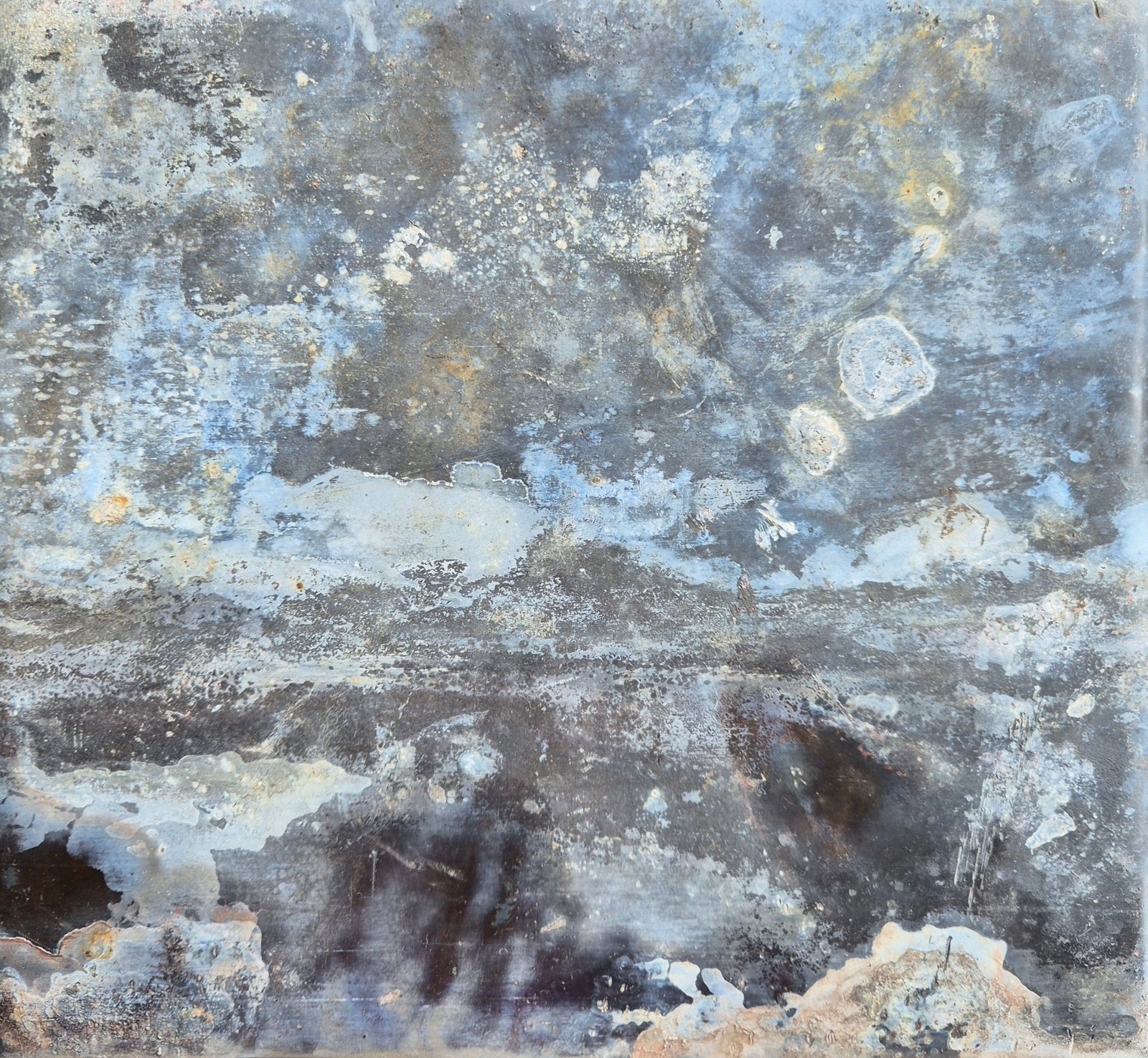
Nigredo
Blackening
Nigredo means blackening. It is the first stage — the complete dissolution of matter before transformation becomes possible. The alchemists called it putrefaction. Nothing new can emerge without passing through it.
Jung read nigredo as the confrontation with shadow — the encounter with what cannot be avoided. It is the stage no one seeks and no one can skip. The darkness is not an obstacle to transformation. It is the first condition of it.
02
Albedo
Whitening
Albedo means whitening. Following the dissolution of nigredo, the matter is washed — ablutio — purified of what is not essential. What remains is not absence. It is bare presence.
Albedo is associated with the moon, with silver, with receptivity. It arrives not through effort but through the cessation of forcing. The alchemists warned that its clarity can be mistaken for completion. It is not the end. It is the end of the lesser work.
03
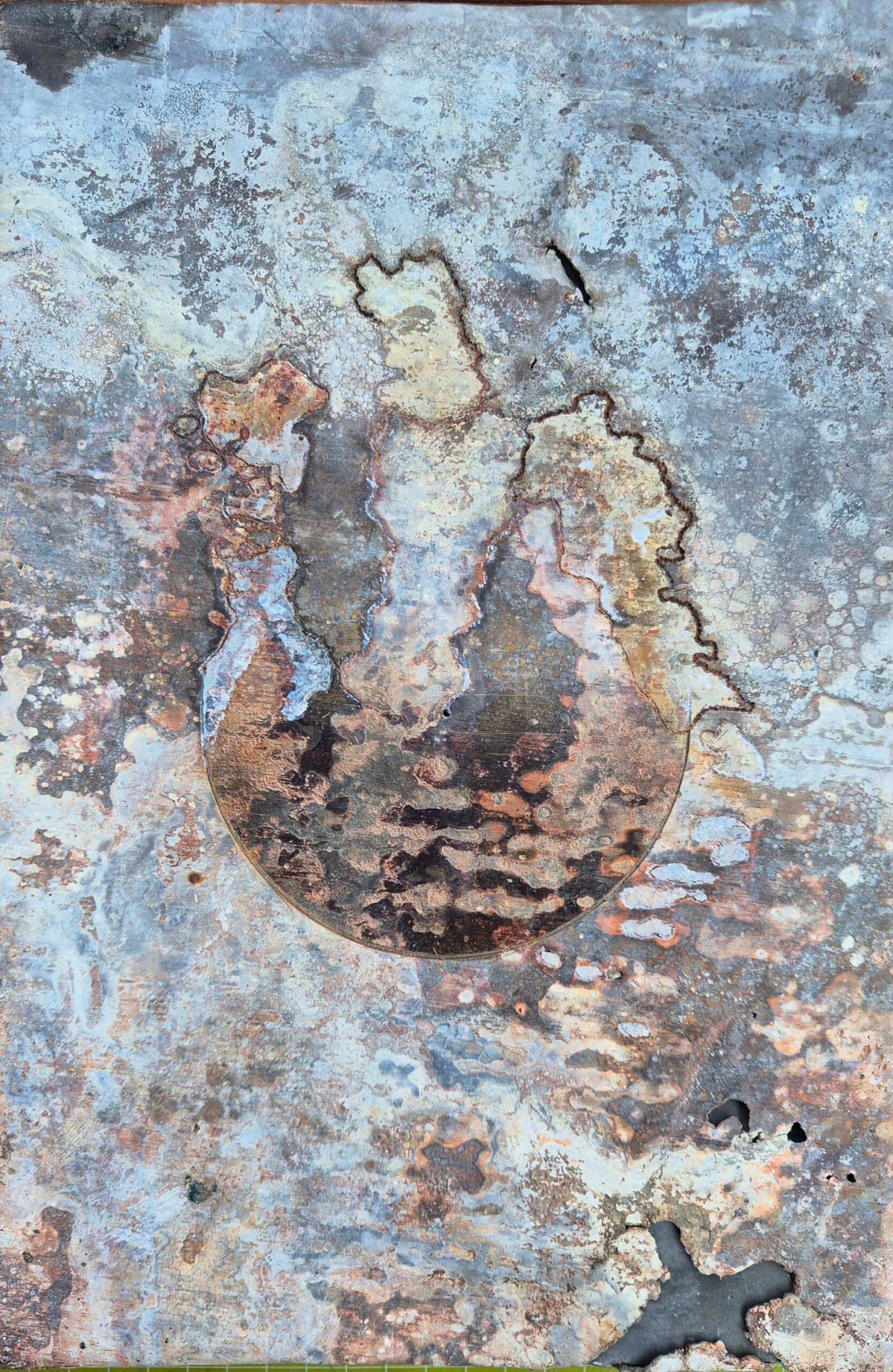
Citrinitas
The Summoning
Citrinitas means yellowing. It is the most neglected stage — later alchemists collapsed it into rubedo, losing the transition it describes. It marks the first appearance of solar light within the work.
The alchemists described it as the moment when lunar reflection is no longer sufficient — when the work turns toward its own source of illumination. Form begins to separate from the undifferentiated. Something is being called forth that has not yet arrived.
04
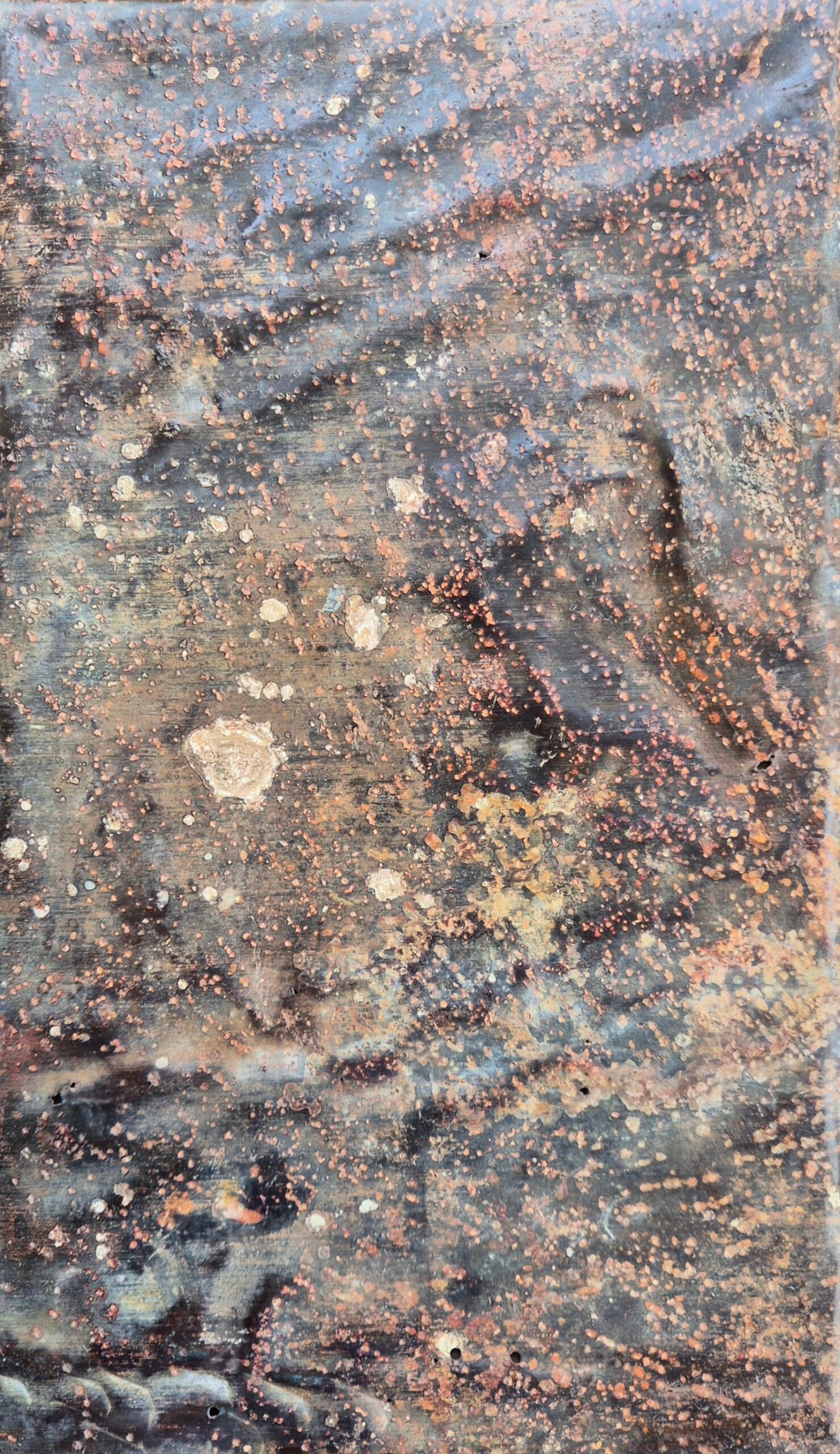
Rubedo
Reddening
Rubedo means reddening. It is the completion of the Magnum Opus — the moment the philosopher’s stone is achieved and the transformed matter reaches full embodiment.
It is not a state of rest. It is a state of complete presence. The work is not finished in the sense of being over. It is finished in the sense of being fully what it is.
Prima Materia — the base matter — names the paradox at the centre of the series. The stages have been traversed. The lead remains lead.